Provence Rosé Wine
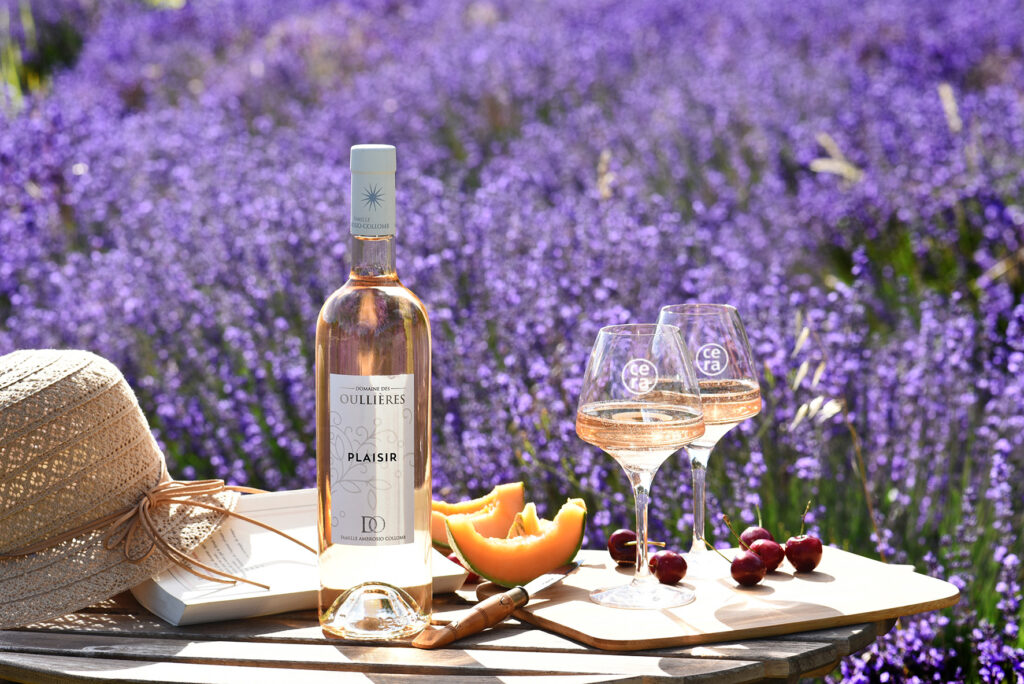
Provence rosé wine has become a global reference. Its pale colour, freshness and elegance make it instantly recognisable. Yet behind this image lies a far richer reality. Not all Provence rosé wines are the same. Terroirs, grape varieties, winemaking methods and the winemaker’s intention all shape the final style of the wine.
Understanding what Provence rosé wine truly is allows you to choose it more confidently, pair it more accurately with food and move beyond simplistic assumptions. This is not a trend. It is a long-established, precise and demanding savoir-faire.
What is a Provence rosé wine
A Provence rosé wine is produced in the south-east of France, mainly from red grape varieties vinified using specific techniques to obtain a pale colour and vibrant aromatic freshness.
Contrary to a common misconception, rosé is not a blend of red and white wine. Its colour comes from a very short contact between the juice and the grape skins. This deliberately limited maceration extracts a delicate hue without adding excessive structure.
In Provence, rosé is a cultural wine. It has accompanied Mediterranean cuisine, shared moments and outdoor meals for generations.
Provence terroirs and their influence on rosé wines
Provence offers remarkable terroir diversity. Limestone, clay-limestone and schist soils, maritime influence, varied relief and altitude all contribute to the character of Provence rosé wines.
Rosés produced near the coast often emphasise freshness and tension. Those from more inland areas tend to show greater structure and aromatic depth.
This diversity explains why there is not one single style of Provence rosé wine, but several distinct expressions rooted in their place of origin.
Grape varieties used in Provence rosé wine
The main grape varieties used to produce Provence rosé wine are Grenache, Cinsault, Syrah and Mourvèdre. Rolle may also be included in certain blends.
Grenache brings fruit and roundness.
Cinsault contributes finesse and freshness.
Syrah adds structure and aromatic intensity.
Caladoc provides depth and ageing potential.
Blending is a crucial step. It allows the winemaker to achieve balance between freshness, complexity and identity.
How Provence rosé wine is made
The most widely used method is direct pressing. Grapes are pressed immediately after harvest, greatly limiting the extraction of colour and tannins.
Short skin maceration may also be used. In this case, the juice remains in contact with the skins for only a few hours before pressing.
Fermentation then takes place at low temperature to preserve delicate aromas. Rosé demands precision. It leaves no room for approximation.
Styles of Provence rosé wine
Several styles of Provence rosé wine exist. Some are very pale, crisp and refreshing. Others are more expressive, fruity and generous. Some show enough structure to pair with more gastronomic dishes.
Style depends on terroir, grape varieties, ripeness and winemaking choices. A great Provence rosé wine is always defined by balance.
Food pairings with Provence rosé wine
Provence rosé wine is one of the most versatile wines at the table. It naturally complements Mediterranean cuisine, fish and seafood, white meats, lightly spiced dishes and grilled vegetables.
Depending on its style, it can also pair beautifully with more structured recipes. Rosé is not just an aperitif wine. It is a true food wine.
Choosing a quality Provence rosé wine
A quality Provence rosé wine can be recognised by its bright, clear colour, a precise and clean nose, a well-balanced palate combining freshness and fruit, and a crisp, refreshing finish.
Origin, the reputation of the estate and stylistic consistency are reliable indicators when selecting a rosé wine of substance.
Conclusion
Provence rosé wine is far more than a summer wine. It expresses a terroir, a climate and a precise savoir-faire. Behind its apparent lightness lies a high level of technical expertise.
Understanding its origins, methods and styles allows for deeper appreciation. A great Provence rosé wine is not a simple wine. It is a true one.